 Skip to content

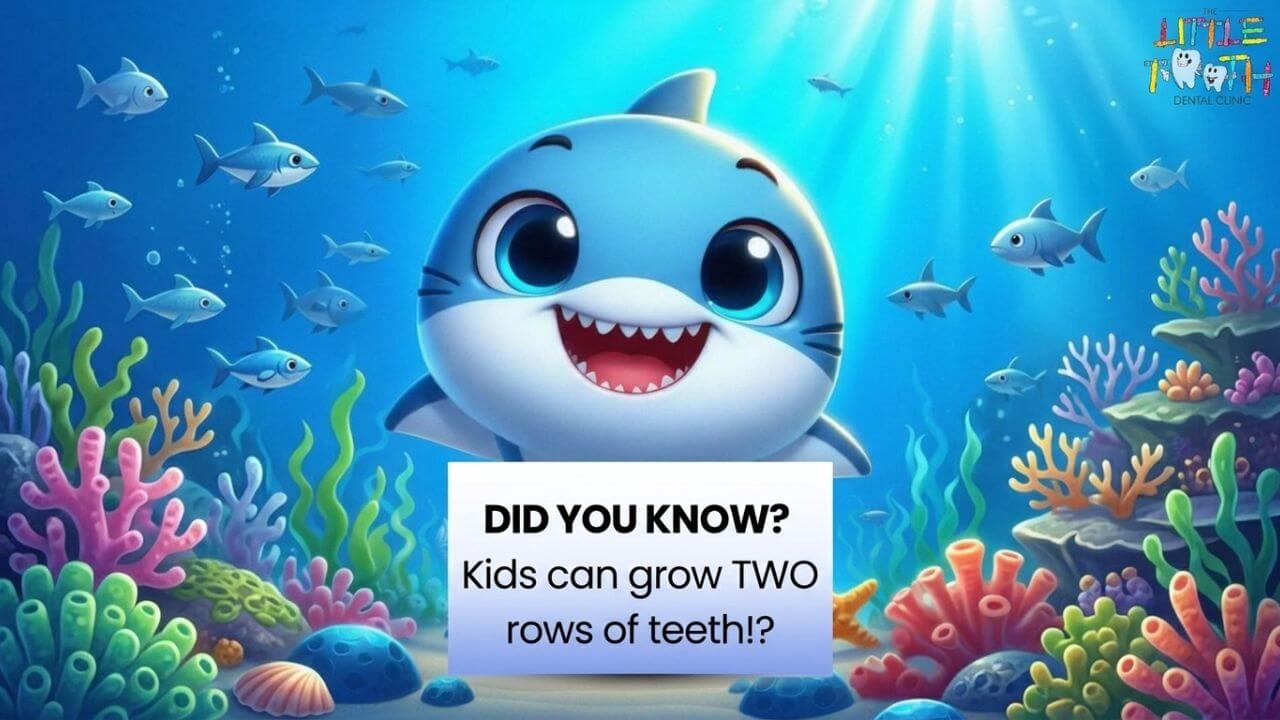
You’re helping your child brush their teeth when you notice something a little strange.
There’s a new tooth coming in.
Except the baby tooth is still there.
And now, instead of one row of teeth, your child appears to be growing a second one.
Before you start wondering whether your child is secretly turning into a shark, here’s some good news.
Adult teeth growing behind baby teeth are actually quite common, and in many cases, there’s nothing seriously wrong.
Dentists sometimes call this phenomenon “shark teeth,” and it’s something parents often notice when their children begin losing their first baby teeth.
So why does it happen? And more importantly, do you need to do anything about it?
What Exactly Are Shark Teeth?
Normally, when an adult tooth starts coming in, it gradually dissolves the root of the baby tooth above it.
As the root gets smaller, the baby tooth becomes loose and eventually falls out, leaving room for the adult tooth to take its place.
But sometimes the adult tooth doesn’t come in directly underneath the baby tooth.
Instead, it emerges slightly behind it.
When that happens, the baby tooth’s root may not dissolve as quickly as expected. The adult tooth starts appearing while the baby tooth is still hanging around.
The result? Two rows of teeth.
It’s a little unusual to look at, but it’s a fairly common part of growing up.
At What Age Does This Usually Happen?
Shark teeth are most commonly noticed around ages five to seven, although the timing can vary from child to child.
They’re especially common with the bottom front teeth.
These are often among the first baby teeth children lose, so it’s usually where parents first notice something happening.
And here’s a fun fact: children typically begin getting their first permanent teeth around age six, but they won’t finish losing all their baby teeth until around age 12.
That’s a lot of changes happening in one little mouth!
Will the Baby Tooth Eventually Fall Out on Its Own?
In many cases, yes.
As the adult tooth continues coming in, the baby tooth may gradually loosen and fall out naturally.
Once the baby tooth is gone, the tongue can sometimes help guide the permanent tooth into a better position.
That doesn’t mean every adult tooth will move perfectly into place, but it does mean seeing two rows of teeth isn’t automatically a sign your child will need braces.
If the baby tooth is already loose, you can encourage your child to gently wiggle it with their tongue or clean fingers.
Just don’t try to force it out if it’s firmly attached.
When Should You Be Concerned?
While shark teeth often resolve without treatment, there are situations where it’s worth having a children’s dentist take a closer look.
For example:
- The baby tooth isn’t loose at all. If an adult tooth is coming in behind a baby tooth that remains firmly in place, a dental assessment is a good idea.
- The adult tooth keeps growing without much change. If the new tooth continues erupting and the baby tooth shows no signs of loosening, your dentist may recommend treatment.
- Your child is experiencing pain or swelling. Tooth development shouldn’t be causing significant discomfort, and these symptoms deserve attention.
- The new tooth is growing in an unusual position. Sometimes crowding or other alignment concerns need to be evaluated.
It’s also worth mentioning that adult teeth growing behind the upper front baby teeth may need closer attention because of how they can affect the bite.
If you’re unsure, there’s nothing wrong with having a dentist check as there could be other teeth problems for kids along with it.
Sometimes the recommendation is simply to keep an eye on things.
Will My Child Need the Baby Tooth Pulled?
Not necessarily.
We know the idea of having a tooth pulled can sound intimidating, especially when you’re talking about a young child.
But having shark teeth doesn’t automatically mean an extraction is needed.
If the baby tooth is already loose and the adult tooth is developing normally, your dentist may recommend allowing more time for the tooth to fall out naturally.
However, if the baby tooth remains firmly attached and prevents the permanent tooth from moving into a better position, removing it may be recommended.
Every child’s teeth develop a little differently, which is why an examination matters.
What Can Parents Do at Home?
While you’re keeping an eye on those new teeth, good brushing habits become especially important.
Having two rows of teeth can create little spaces where food and plaque get trapped.
Make sure your child is brushing both the baby teeth and the adult teeth behind them. Depending on their age, they might need a little help reaching those awkward spots.
Continue flossing where teeth touch, and remind your child that it’s okay to gently wiggle a loose baby tooth.
One thing we wouldn’t recommend? Trying to pull out a tooth that isn’t ready.
Let your child’s dentist help determine the best approach.

Two Rows of Teeth? No Need to Panic.
Seeing an extra row of teeth in your child’s mouth can be surprising.
But for many children, shark teeth are simply a temporary stage as their adult smile begins to develop.
The important thing is making sure those new teeth have the room they need and that everything is developing as expected.
At The Little Tooth in Saskatoon, we work with children through all the exciting, awkward, and sometimes surprising stages of losing baby teeth and growing adult ones.
Our dental clinic is designed specifically for kids, with a colourful underwater theme and an environment that helps make dental appointments feel a little less intimidating.
If you’ve noticed an adult tooth growing behind your child’s baby tooth, we’d be happy to take a look.
Contact The Little Tooth in Saskatoon to book your child’s dental appointment.
We’ll help you figure out whether it’s time for the tooth fairy or just a little more patience.
