 Skip to content
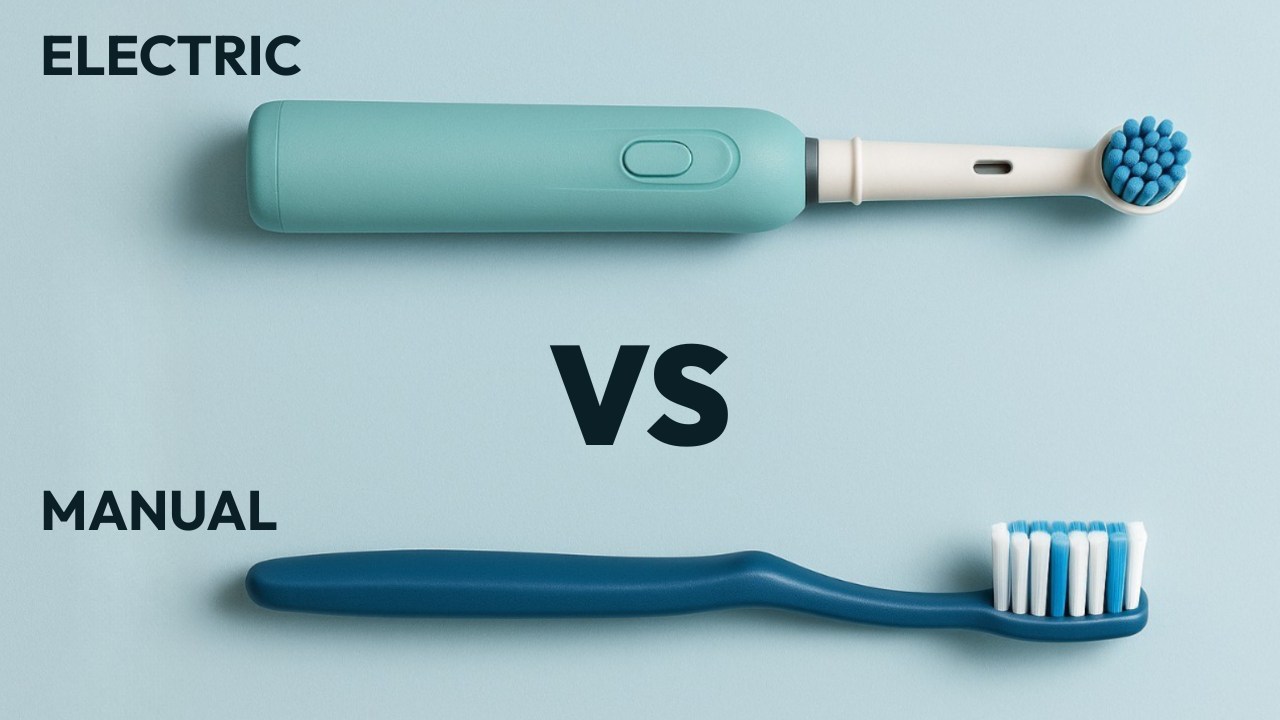
If you’ve ever stood in a Shoppers aisle and wondered which was better, a cheap $4 manual brush or a fancy $120 electric brush…you’re not alone. Here’s a peek at the different aspects to consider when selecting the brush that suits your mouth, budget, and habits.
The Bottom Line Up Front
You can maintain a healthy mouth with either manual or electric brushes as long as you brush well for two minutes twice a day with fluoride toothpaste. That’s from the advice on brushing from the Canadian Dental Association.
Whereas electrics have a definite advantage in consistency and measurable plaque/gingivitis reduction, especially for oscillating-rotating models. Large reviews found that, compared to manual brushes, electric brushes reduce plaque by 11% after 1-3 months and by 21% after 3 months, and reduce gingivitis by 6-11%.
What the Science Says (Short and Sweet)
- Electric edges out manual on average. Multiple systematic reviews and meta-analyses (one classic, the Cochrane review) demonstrate that the effects of powered brushes, especially oscillating rotating heads, are more effective than manual at removing plaque and reducing gum inflammation over time.
- Not all electrics are equal. Head style matters. Analyses comparing oscillating rotating vs sonic reveal some small but consistent advantages for oscillating rotating in terms of plaque and gingivitis reduction.
- Technique still rules. Health Canada and the CDA emphasize the fundamentals: brush at a 45-degree angle towards the gum line, brush all surfaces, and brush for approximately 2 minutes. Additionally, replace the brush heads every 3 months or so. These habits drive most of your results, regardless of your handle.
Who Benefits most from going Electric?
- If you have a difficult time with technique or timing. Built-in timers and pressure sensors help you do a good brushing without scrubbing too hard (a common cause of gum recession). (This is consistent with the performance improvements in reviews.)
- If you have dexterity problems (such as arthritis). Canadian dental literature notes that a lack of manual dexterity can make it more challenging to remove plaque thoroughly – an area where powered brushes often provide assistance.
When a Manual Brush is Totally Fine
- You’re consistent, gentle, and thorough (two minutes, twice a day) and you are replacing your brush regularly.
- You like the feel and cost of manual, and your hygienist is happy with what he/she sees at cleanings.
- The best evidence in Canada supports that a manual or electric toothbrush is effective when used properly with a fluoride toothpaste.
A quick Canadian Buying Guide (What Actually Matters)
- Head style: If you’re going electric for results, look for oscillating-rotating models, the best types of brush heads studied to improve plaque/gingivitis. PubMed
- Pressure sensor & timer: Prevent “over-brushing” and make sure that you brush for the full two minutes (your gums will thank you). Government of Canada
- Replacement head availability/cost: Ensure you can find heads readily in your area (and commit to replacing them approx. every 3 months). cda-adc.ca
- Feel & noise: Sonic brushes have a more buzzing feel; oscillating-rotating feel “pulsing.” Pick out what you’re actually going to use every day. (Both are effective provided good technique is used.) PubMed
How to Brush (the 30-second refresher)
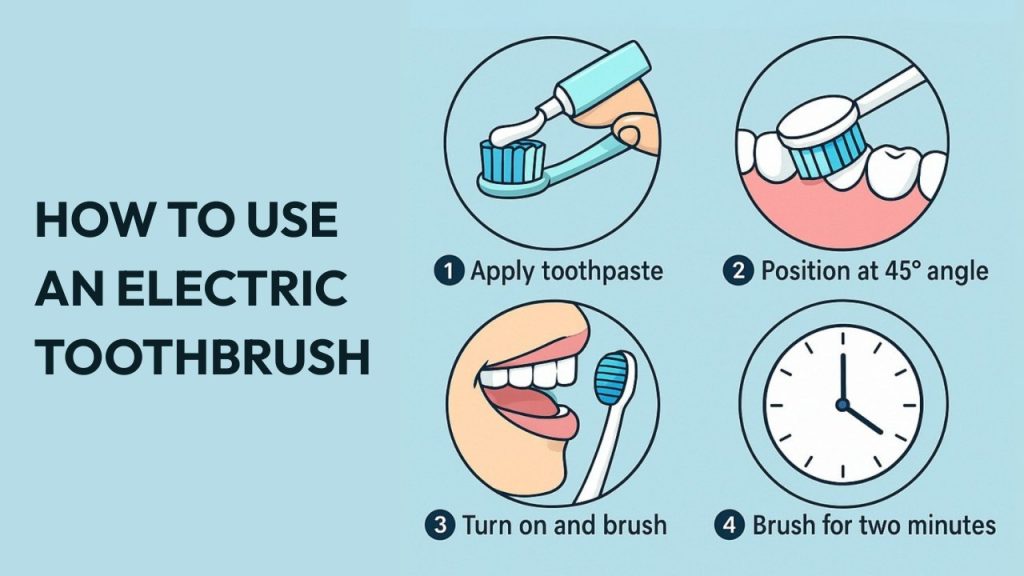
- Aim bristles at a 45-degree angle to the gumline, small strokes, gentle pressure.
- Two minutes, twice a day, and don’t rinse immediately. Spit, that way fluoride is on the teeth longer.
- Brush your teeth 30 minutes after you eat (protects enamel)
- Replace every 3 months or less when the bristles fan out. cda-adc.ca
Our Clinic’s Take
If the budget allows, an electric brush (ideally oscillating, rotating with a timer and pressure sensor) provides most people with a helpful edge. But if you love your good old manual brush and your gums look healthy at checkups, you’re doing great. Don’t change that technique; just keep those bristles fresh. Cochrane
Want a custom recommendation? Bring your brush (or photos) to your next visit, and we will check your technique and make a suggestion for a head/handle that will suit you perfectly.
