 Skip to content
Your little one’s first visit to the dentist is a major accomplishment – yours as well as his or her!
We hear from parents a lot that they are not sure how their toddler will be going to respond.
That’s completely understandable. Exploring new environments, meeting new people, experiencing new noises, and being looked in the mouth can be overwhelming for a little one. Fortunately, there are many simple steps parents can take to make that initial dental visit more comfortable and familiar—and even enjoyable.
Quick Answer
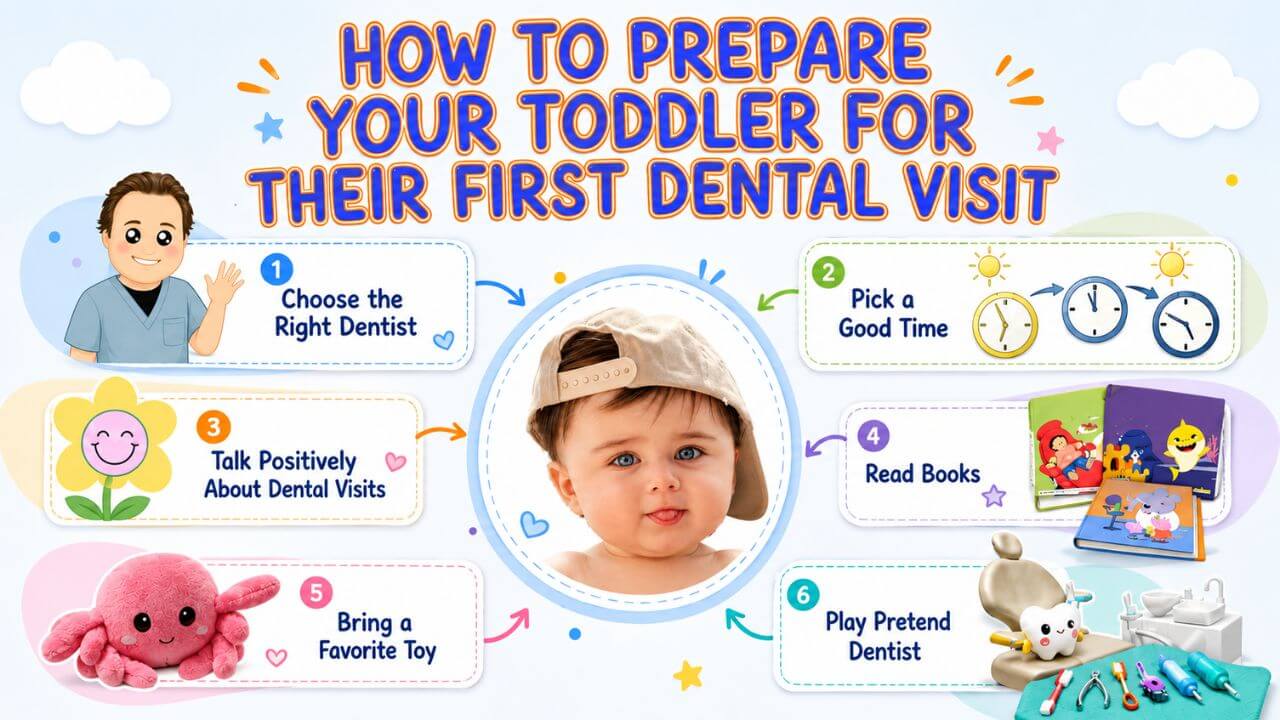
The most effective way to get your toddler ready for his or her first dental appointment is to make it fun and calm. Have a positive discussion about the dentist, read books about visiting the dentist, practice opening wide at home, and bring a favorite comfort object. Most importantly, keep in mind that it’s perfectly fine if your child is nervous or cries during their first appointment.
Key Takeaways
- Use positive and straightforward language when talking to the dentist.
- Don’t use language that may make the appointment seem threatening.
- This can be more familiar with the use of books, videos, and pretend play.
- Your toddler might be calmer if he/she brings a favorite toy or comfort item.
- It is normal for a child to cry when visiting the dentist for the first time.
- Children can gradually become more comfortable and confident with regular visits.
Talk About the Dentist in a Positive Way
Toddlers are known to be influenced by their parents.
When you mention going to the dentist, if it seems scary, stressful, or painful, your child will become nervous before he or she even gets there.
Rather, it’s best to have something simple and positive. They could describe that the dentist will count their teeth, look at their smile, and help them keep their teeth strong and healthy.
It’s important not to provide too much information about what may happen during the appointment. Children under the age of six generally perform best when they are given only enough information to be adequately prepared, without being overloaded in case something goes wrong.
Read Books About Going to the Dentist
Read stories to toddlers to help them get used to new experiences.
Read a children’s book about visiting the dentist prior to their appointment. Your child can learn what to expect if he or she sees familiar faces sitting in a dental chair, opening their mouths and having their teeth examined.
Short, age-appropriate videos can also be helpful. The objective is NOT to make the dental visit sound like a big deal. You are merely making your child aware of some of the items that they may encounter once they are there.
Play Pretend Dentist at Home
One of our favorite methods to help toddlers prepare. Make dental care a game!
Ask your child to sit in a chair and to pretend to count their teeth. Have them open their mouths and say “ahhh.” Then have them switch roles and play dentist; you or your favourite teddy bear plays patient.
A toothbrush can also be used to give a stuffed animal a “check” if you like. Toddlers can have a glimpse of what a dentist’s visit will be like in a familiar setting with pretend play.
And they’re the ones who dictate the game, making the actual matchup a lot less foreign.
Bring Their Favourite Comfort Item
A little bit of home can make a new place feel a bit more like home. If your child has a favorite object, blanket, toy, or other comfort object, you might want to bring it to the appointment.
Their teddy bear may even require a dental examination as well! When your toddler is around unfamiliar people, noises, and equipment, having something familiar is reassuring.
Choose a Dentist Who Is Comfortable Working With Young Children
Toddlers are not simply smaller versions of adult dental patients. They may need more time. They may wish to pose questions. May not want to remain stationary. They may decide to change their mind during the appointment.
Sometimes they cry, too. This is why it’s so important to have a team of dentists who have experience in treating young children.
A dental visit should not only be a time when your child’s teeth are examined, but it should also help your child feel comfortable in a dental chair.
Familiarizing kids with the office by having them sit in the chair can be a crucial first step for some.
What If My Toddler Cries at the Dentist?
This is one of the most prevalent concerns of any parent. And the answer is quite easy: It’s okay. Don’t consider the appointment to be a failure if the child cried.
Your little one is going through a totally new experience. Some kids enter their initial appointment excited and curious. Others require more time to feel comfortable.
The two reactions are normal reactions.
We have witnessed children crying through much of their initial visit and returning months later with a completely different disposition. The more positive experiences they have, the more they get used to the dental office.
Perfect first appointment isn’t the goal. The aim is to start establishing trust.
Try Not to Put Too Much Pressure on the First Visit
Parenting is a natural desire for all parents to get things right. However, sometimes toddlers can get a feel for when we are really looking for them to do something!
Try and keep the appointment casual rather than telling them “You have to be brave”, or “Don’t cry”. Let your child know that you’re going to visit the dentist and see what happens.
If they are feeling comfortable enough to do the whole trip, great! If they require a bit more time, it’s okay as well.
There will be other appointments and other chances to gain confidence.
Why Early Dental Visits Matter
Early dental visits aren’t only about looking for problems. They also give children an opportunity to become familiar with the dental office before they are experiencing a toothache or another dental concern.
Regular visits can help your child begin to understand that going to the dentist is simply another part of taking care of their body—just like brushing their teeth, washing their hands, or visiting their doctor.
They also give parents an opportunity to ask questions about brushing, toothpaste, eating habits, tooth development, and anything else they may be wondering about.
Your Child Doesn’t Have to Love the Dentist Right Away
Some toddlers love their first visit. Some are curious. Some are nervous. And some cry from the moment they walk through the door.
Every child is different. What matters most is creating positive experiences and giving your child the time they need to become comfortable.
We’ve seen plenty of little patients go from tears during an early appointment to big smiles, high-fives, and excitement during future visits.
Sometimes it simply takes time. And there’s always a next visit—and a next, next visit.
Frequently Asked Questions About a Toddler’s First Dental Visit
How should I explain the dentist to my toddler?
Keep your explanation simple and positive. Tell them that the dentist will look at and count their teeth and help keep their smile healthy. Avoid introducing scary words or describing procedures they may not even need.
Should I practise before my child’s appointment?
Yes. Pretending to be the dentist at home can be a fun way to prepare. Practise opening wide, counting teeth, or brushing a stuffed animal’s teeth.
Can my toddler bring a toy to the dentist?
In many cases, absolutely. A favourite stuffed animal, blanket, or comfort item can help a young child feel more secure in an unfamiliar environment.
What happens if my child cries?
That’s okay. Crying is a normal response for many toddlers when experiencing something new. A first dental visit is often about building familiarity and trust rather than expecting perfect cooperation.
What if the entire appointment can’t be completed?
That’s okay too. Every positive interaction with the dental office can help make the next visit easier. Sometimes building confidence happens gradually over several appointments.
Helping Little Smiles Feel Comfortable
Your toddler’s first dental visit doesn’t need to be perfect. A little preparation, plenty of encouragement, and a patient dental team can help turn an unfamiliar experience into the beginning of a healthy relationship with dental care.
Talk positively about the dentist, practise at home, bring something comforting, and remember that your child is allowed to take things at their own pace.
Whether their first visit comes with a big smile, a few tears, or a little bit of both, it’s still an important first step toward a lifetime of healthy smiles.
If you’re getting ready for your child’s first dental visit, we’d love to help make the experience as comfortable and positive as possible.
Schedule your child’s dental consultation with our team today.
