
The first dental visit is an important milestone in a child’s life. For some children, it’s an exciting experience. It can be fresh and new, even slightly daunting, to others. Fortunately, with proper preparation, parents can help ensure that the first appointment is positive, calm, and even fun.
We have a dedicated team at The Little Tooth Dental Clinic, who are committed to making all children feel safe, relaxed, and supported as soon as they come into our clinic. It’s never too early to prepare your child the first time they visit the dentist and it can also make a huge difference if they have been a while since their last checkup.
When Should Your Child Have Their First Dental Visit?
One of the best guidelines to follow is to take your child to the dentist when his or her first tooth erupts, or by about his or her first birthday. The first visit is usually easy, relaxed and aimed at making your child familiar with the dental setting.
It also provides parents with an opportunity to ask questions about how to brush, how teething should look, about snacks, bottles, thumb-sucking and pacifiers, and anything else that relates to their child’s developing smile.
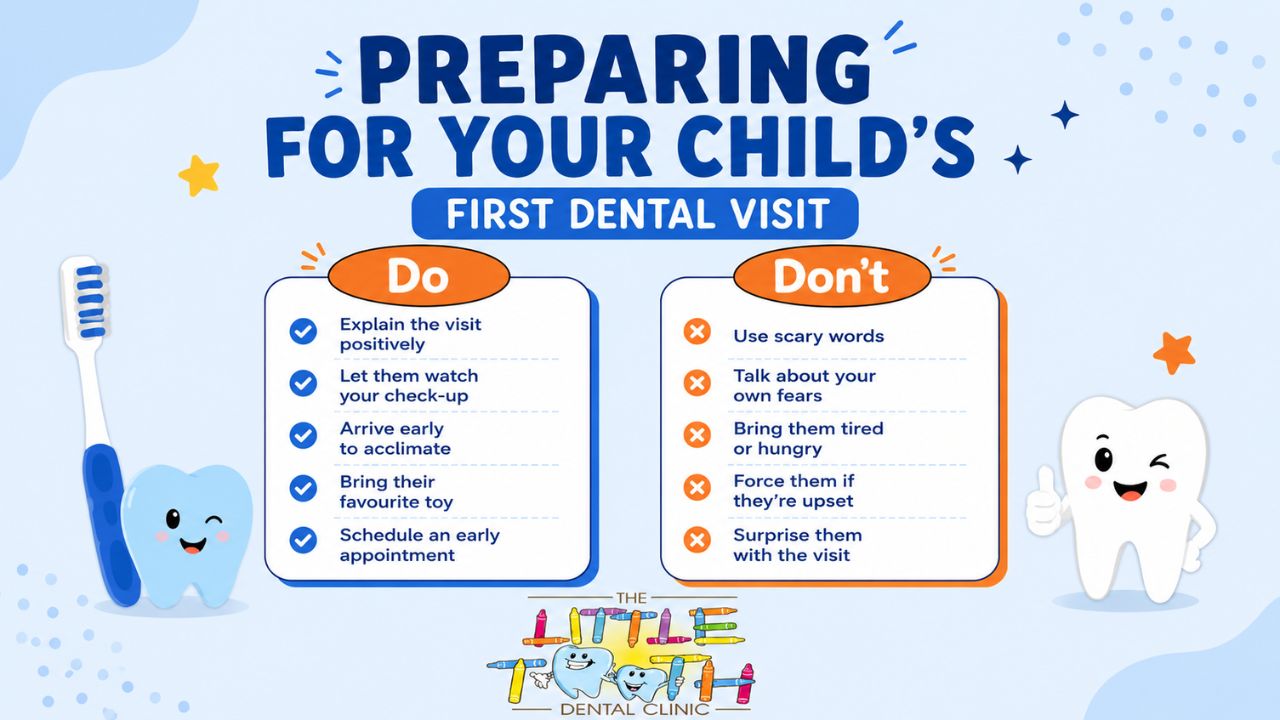
Do: Explain the Visit Positively
How you speak about the dentist is important. Children are very sensitive to the emotions and tone of speech of the adults around them; therefore, keep the conversation simple, calm, and positive.
You could say things like:
“We’re going to visit the dentist so they can count your teeth.”
“They’re going to help keep your smile healthy.”
“You get to sit in a special chair and show them your teeth.”
Aim to make the visit as non-threatening and non-distressing as possible. The goal is to make it feel like a normal, helpful part of taking care of their body.
Don’t: Use Scary Words
Words, if they’re not used with good intention, will cause a child to feel nervous before he even gets there. Even if the visit doesn’t involve these words, such as “hurt,” “needle,” “drill,” “pain” or “shot,” they may still give rise to fear.
Instead, use kid-friendly language. For example, instead of saying “They won’t hurt you,” try saying, “They’re going to be very gentle.” Use “They’re going to clean your teeth and make them sparkle” instead of “They might scrape your teeth”.
Changes in wording can have an impact.
Do: Let Them Watch Your Check-Up
If your child is older, having them observe a parent or sibling’s dental visit can help familiarize them with the process. Children are curious and observing another child who is sitting calmly in the dental chair can help them get a feel for what to expect.
This can take away some of the mystery. They can see the chair, hear the sounds, meet the team, and learn that a dental visit is a normal part of staying healthy.
Don’t: Talk About Your Own Fears
Many adults experience anxiety about going to the dentist, and that’s fine. However, if you discuss the fears in front of your child, he or she will begin to feel the same way.
Don’t say things such as:
“I hated the dentist when I was a kid.”
“I hope this doesn’t hurt.”
“I’m nervous too.”
Instead, concentrate on your child’s experience. Be encouraging, relaxed and confident. You don’t have to ‘act’ fine, but you must make your child feel safe and supported.
Do: Arrive Early to Acclimate
Getting in a rush for an appointment can create a stressful environment for anyone, particularly a child. Getting a few minutes early will allow your child to explore the space, familiarize him/her, and settle before the appointment.
This is particularly beneficial for children who are shy, anxious, or sensitive to new places. Just a bit more time can make them feel more in control and not taken off-guard by all the things that are going around them.
Don’t: Bring Them Tired or Hungry
Timing matters. If a child is tired, hungry, and overwhelmed, he/she may not be able to deal with the appointment as well.
If possible, plan the visit during the time of day when your child is well-fed and well-rested. Many families find that morning appointments are the best option as children are more energetic and patient in the mornings.
However, each child is special. Choose a time that works best for your child’s routine.
Do: Bring Their Favourite Toy
A comfort item can make a new experience feel much safer. Bringing a favourite stuffed animal, blanket, or small toy can help your child feel more relaxed during the appointment.
Some children like to have their toy “watch” the appointment. Others like to hold it while they sit in the chair. Either way, it gives them something familiar in a new environment.
Don’t: Force Them If They’re Upset
Some children may not feel comfortable on their first visit. They may not feel like opening their mouth initially, sitting in the chair, or speaking to a new person.
That is okay.
This positive first visit isn’t about making it all go smoothly. It is about building trust. The greatest benefit often lies in assisting your child to walk in, meet the team and walk out feeling good.
Our staff is experienced in interacting with children’s comfort levels. We proceed step by step and support your child on his/her way.
Do: Schedule an Early Appointment
Earlier appointments can often be a great option for young children. The children are likely to be more relaxed, more willing to cooperate, and better able to tolerate a new experience sooner in the day.
If your child is easily fatigued or overstimulated later in the day, he/she might benefit from a morning appointment.
Don’t: Surprise Them With the Visit
You might think that a surprise visit to the dentist is the best way to prevent your child from worrying, but it can make them feel less prepared and more anxious.
Instead, tell them ahead of time in a calm and simple way. You do not need to over-explain. A short, positive explanation is enough.
For example:
“Tomorrow we’re going to the dentist. They’re going to count your teeth and help keep your smile healthy.”
This gives your child time to understand what is happening without building it up into something scary.
A Positive First Visit Can Set the Tone
Your child’s first dental visit is about more than checking teeth. It is about helping them build confidence, trust, and healthy habits that can last a lifetime.
When parents use positive language, plan around their child’s routine, bring comfort items, and avoid pressure, the dental office can become a place that feels safe and familiar.
At The Little Tooth Dental Clinic, we love helping kids feel comfortable with dental care from the very beginning.
If your child is ready for their first dental visit, we would be happy to welcome your family and help make the experience a positive one.