
It’s easy to assume that if your child isn’t complaining about tooth pain, everything must be fine.
Sadly, this is not always true. A common dental health misconception is:
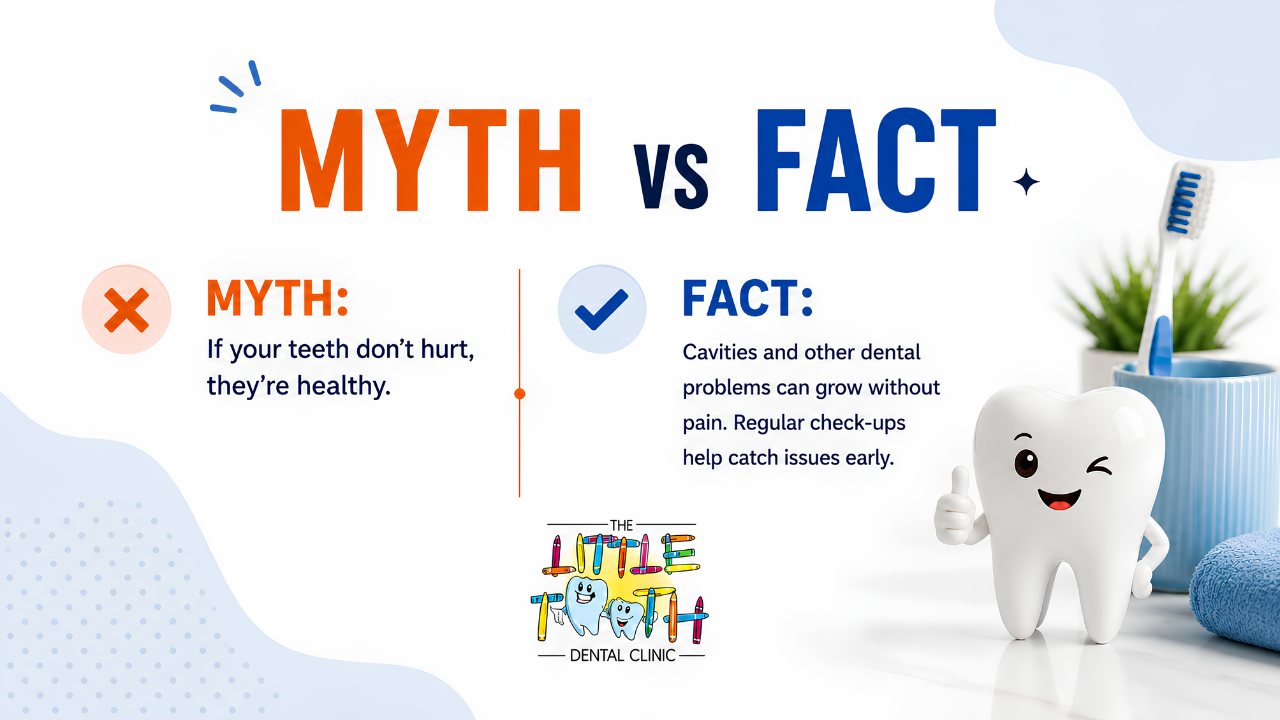
Myth: “If the teeth don’t hurt, they are healthy.”
Fact: Cavities and other oral issues can develop without any symptoms, particularly in the initial phases.
This is particularly true for children. Sometimes children are not aware of or able to describe their feelings, and some dental problems can occur discreetly without any warning signs.
So a teeth inspection is the best option & you need to prepare for your child’s first dental visit in saskatoon.
Why Tooth Problems Don’t Always Hurt Right Away
Tooth decay usually starts small. In the early stages, it can present as small white or dark patches, as changes in color near the gum line, or as an area only a dentist can see clearly during an examination.
According to the Canadian Dental Association, signs of early childhood tooth decay include white, dull spots or lines on the teeth, particularly near the gums. It can cause pain and infection if not treated promptly.
Waiting for pain sometimes means waiting too long.
Baby Teeth Matter More Than People Think
Another popular myth is that baby teeth are “just going to fall out anyway.”
But baby teeth play a big role in your child’s health and development. They aid children in chewing and talking and leave room for grown-up teeth. Leaving cavities untreated can lead to pain, infection, difficulty eating, and future dental problems.
A healthy smile begins at a young age, before the adult teeth have come in.
What Parents Should Watch For
If your child reports that his or her teeth don’t hurt, it’s still a good idea to watch for small changes, such as:
- White, brown, or dark spots on the teeth
- Sensitivity to cold, sweet, or hot foods
- Bad breath that doesn’t go away
- Bleeding gums
- Avoiding certain foods
- Complaints when chewing
- Swelling or redness around the gums
- If you see any of these symptoms, it is best to make a dental appointment.
- Routine check-ups detect problems early on
Going to the dentist frequently isn’t just about filling cavities. They help prevent issues and catch small issues before they become large ones.
The check-up provides an opportunity for the dental team to detect early signs of decay, observe how the teeth are developing, remove plaque from hard-to-reach areas, and offer parents helpful advice on brushing, flossing, snacking, and daily habits.
The aim is to maintain visits simple, positive, and comfortable for your child.
How to Help Keep Your Child’s Teeth Healthy at Home
A positive home oral hygiene routine can have a significant impact. Here are some easy habits that can help keep your child’s smile safe:
- Brush twice a day with fluoride toothpaste
- Help or supervise brushing, especially for younger kids
- Floss once a day when your teeth touch
- Drink water more than juice and pop.
- Keep those sticky, sweet treats to a minimum!
- Keep up with regular dental visits
Cavities are preventable, and there are preventive measures children can take to protect their teeth, such as using fluoride toothpaste, drinking fluoridated water (if available), and having fluoride varnish and dental sealants, according to the CDC.
The Bottom Line
Don’t assume that if someone isn’t in pain, they aren’t in trouble. Children’s dental problems may develop stealthily, and that is why regular check-ups are important. Early detection may make treatment more simple, prevent discomfort, and help maintain your child’s smile throughout their life.
Our priority at The Little Tooth Dental Clinic is to ensure that children and parents have a positive, gentle and friendly dental experience.
Because healthy habits today can lead to happy smiles tomorrow.
Book an Appointment for the teeth inspection of your child!