 Skip to content
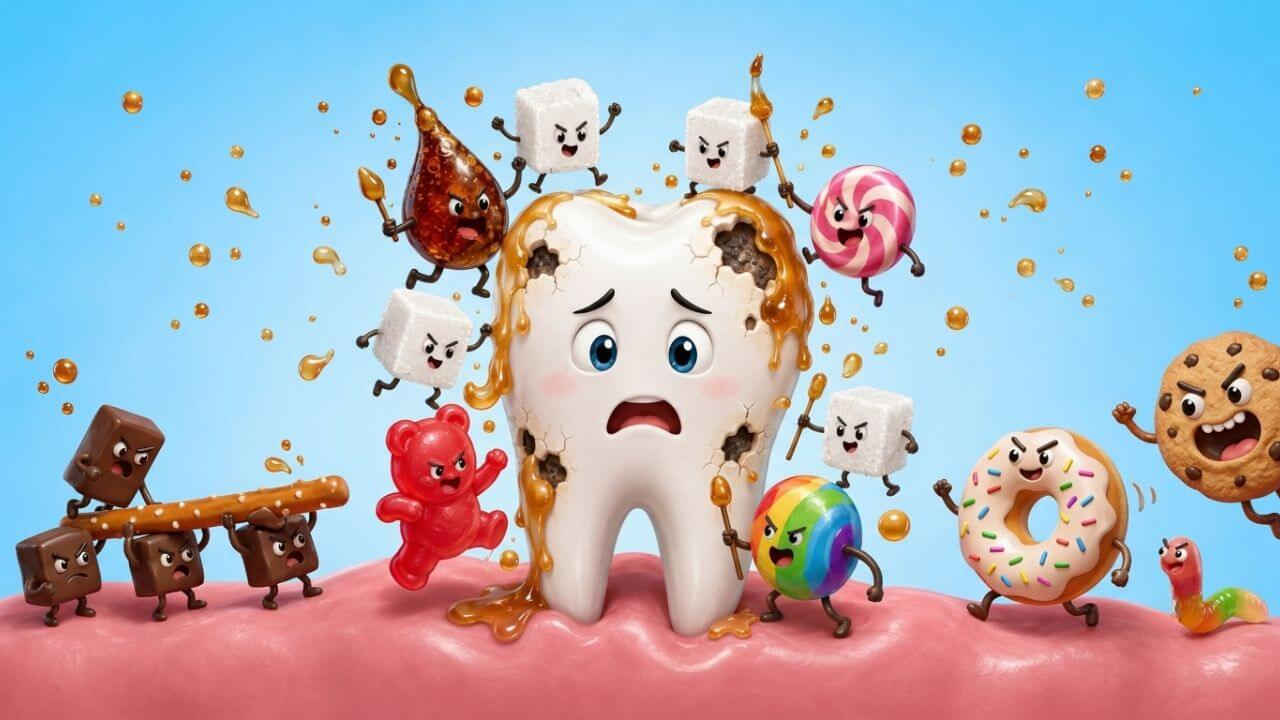
Most parents know that too much sugar is not great for their child’s teeth. The tricky part is that sugar is not only found in candy, chocolate and desserts. It can also hide in everyday snacks and drinks that may seem like healthier choices.
You do not need to remove every treat from your child’s life.
Birthday cake, ice cream and the occasional christmas candy are part of being a kid!
What matters most is understanding which foods can cause problems and how often your child’s teeth are exposed to them.
Specially a parents have to know what sugar really does to your teeth.
How Does Sugar Cause Cavities?
Our mouths naturally contain bacteria. When your child eats or drinks something containing sugar, those bacteria use the sugar to produce acid. That acid attacks the enamel, which is the hard outer layer protecting the teeth.
The longer and more frequently sugar remains in the mouth, the greater the opportunity for tooth decay to develop. This means slowly sipping a sugary drink or frequently snacking throughout the day can be especially hard on teeth.
This is how cavities really form.
Here are some of the biggest sugary foods and drinks to watch for.
Sticky Candy and Gummies
Gummy candies, fruit snacks, caramels, taffy and other sticky treats can cling to the grooves of teeth and get trapped between them. Because they remain in the mouth longer than foods that are quickly swallowed, teeth may be exposed to sugar for an extended period.
This category can also include gummy vitamins. Although they may look like a health product, many are sweet, sticky and similar in texture to candy.
When your child does have a sticky treat, offer it with a meal rather than as a snack they slowly eat throughout the day. Drinking water afterward can also help wash away some of the sugar left behind.
Sugary Drinks
Pop, sports drinks, fruit punches, sweetened iced teas, slushes and flavoured waters can contain a surprising amount of sugar. Because the liquid moves around the entire mouth, it can expose many tooth surfaces to sugar at once.
Even 100% fruit juice contains free sugars and has been associated with a greater risk of dental decay in children. Juice may seem healthier than pop, but it should still be treated as a sugary drink rather than a replacement for water.
Water is the best everyday drink for thirsty kids. Plain milk can also be a good option with meals.
Fruit Snacks and Dried Fruit
Fresh fruit is a nutritious part of a child’s diet. Dried fruit and processed fruit snacks, however, are different.
Raisins, dried cranberries, fruit leather and packaged fruit snacks are concentrated, chewy and likely to stick around the teeth. Some products also contain added sugar, even when the packaging uses words such as “natural” or “made with real fruit.”
Whenever possible, choose fresh fruit instead. Apples, pears, berries, melon and other fresh options contain water and are less likely to cling to teeth.
Sweetened Yogurt
Yogurt can be a great source of nutrients, but not all yogurts are the same. Flavoured children’s yogurts, yogurt tubes and drinkable yogurts may contain added sugar.
Try choosing plain, unsweetened yogurt and adding fresh fruit for sweetness. When buying flavoured yogurt, compare the nutrition labels and choose an option with less sugar.
Granola Bars and Cereal Bars
Many granola bars are marketed as wholesome school snacks, but some contain chocolate chips, marshmallows, syrups or sweetened coatings. Their chewy texture can also cause pieces to stick in the grooves of children’s teeth.
Look for bars with less added sugar, or try alternatives such as cheese, vegetables, fresh fruit, eggs or unsweetened yogurt. The Canadian Dental Association also recommends tooth-friendly snacks including plain milk, cheese, fresh fruit, raw vegetables, eggs, nuts and seeds when age-appropriate.
Cookies, Pastries and Sweetened Cereals
Cookies, muffins, doughnuts, pastries and sugary breakfast cereals are obvious sources of sugar, but they can become so familiar that they no longer feel like treats.
A muffin may seem like a breakfast food, but some varieties are closer to cake. Sweetened cereals can also expose teeth to both sugar and starch, especially when children snack on them dry throughout the day.
These foods do not need to be completely forbidden, but they are best enjoyed occasionally rather than becoming everyday snacks.
It Is Not Only About How Much Sugar
How often your child has sugar matters too.
Eating a dessert with a meal is generally better for the teeth than slowly snacking on sweet foods over several hours. Each new sugary snack or sip gives bacteria another opportunity to produce acid.
Try to keep regular meal and snack times rather than allowing children to graze throughout the day. Between meals, encourage water instead of juice or another sweetened drink.
This is how you can avoid teeth problems for kids.
Small Changes Make a Big Difference
Protecting your child’s smile does not require a perfect diet. Start with a few realistic changes:
- Make water the main drink between meals.
- Replace sticky fruit snacks with fresh fruit.
- Check labels for added sugar.
- Keep treats to planned times instead of all-day snacking.
- Encourage brushing twice a day.
- Help younger children brush until they can do a thorough job independently.
At The Little Tooth, we understand that feeding children can be complicated. Our goal is not to make families feel guilty about sugar. We are here to offer practical advice that works for real families and helps children build healthy habits for life.
Regular dental visits also allow us to identify early signs of tooth decay and provide recommendations based on your child’s individual needs.
Contact The Little Tooth to schedule your child’s next visit and keep their little smile healthy, strong and bright.
